Plant science research can sustainably transform a crop’s productivity and its adaptive capacity to climate stress for smallholder farmers. The stakes are high, and there is no time to lose.
Demand for smallholder-focused innovation is already substantial — and increasing. One in four people on the planet will live in sub-Saharan Africa by 2050, yet yields on the continent are only 15-20 percent of those in similar growing regions.
Despite this, conventional research and development often neglects the priorities and needs of smallholders if the risk is too high or the road to commercialization too uncertain. Gates Ag One uses patient capital and convening power to change that by accelerating promising science to protect harvests, boost yields, and close the gap for smallholder farmers.
A Spotlight on the Science
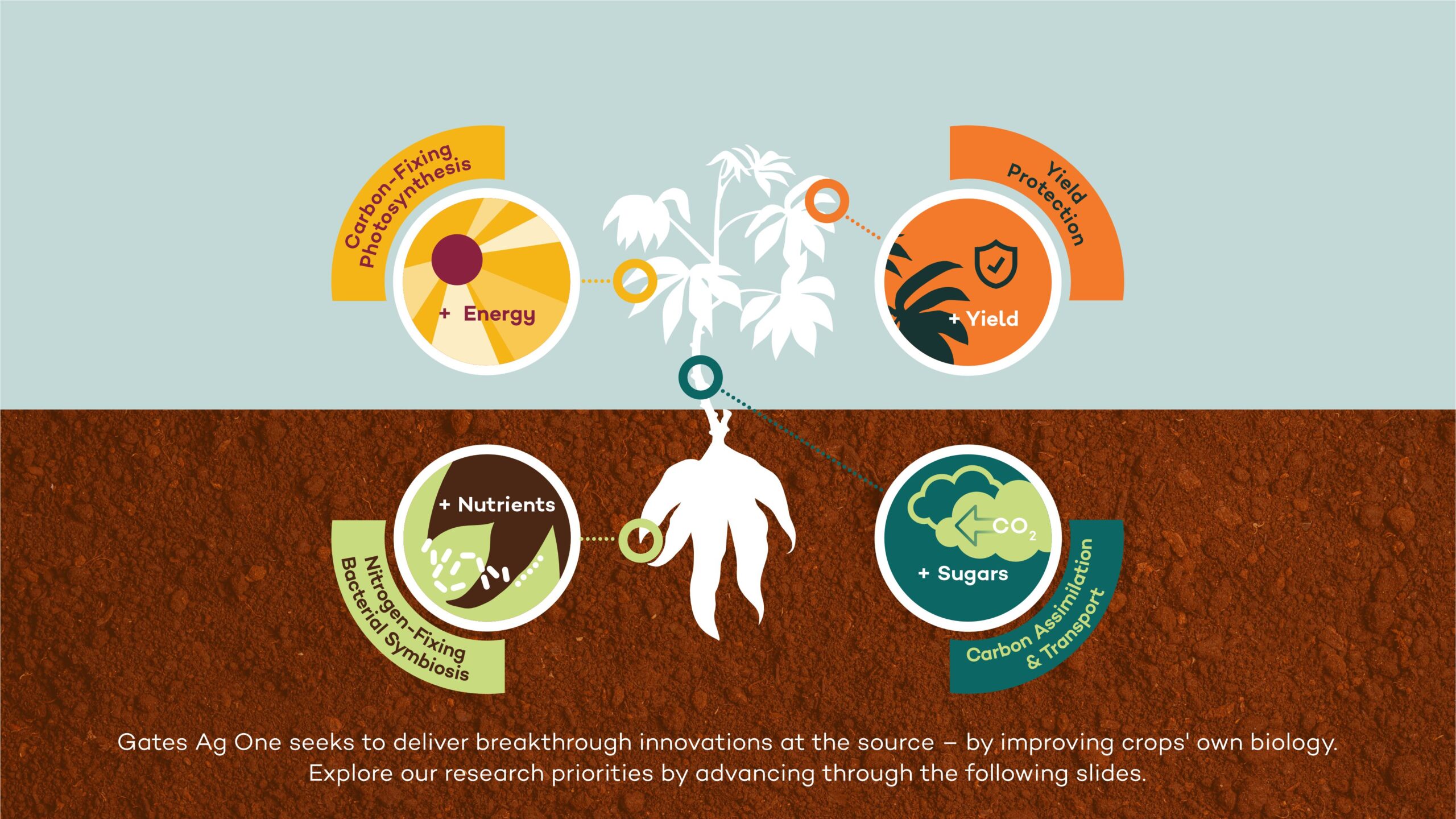
Gates Ag One seeks to deliver breakthrough innovations at the source – by improving crops’ own biology. Explore our research priorities by advancing through the following slides.
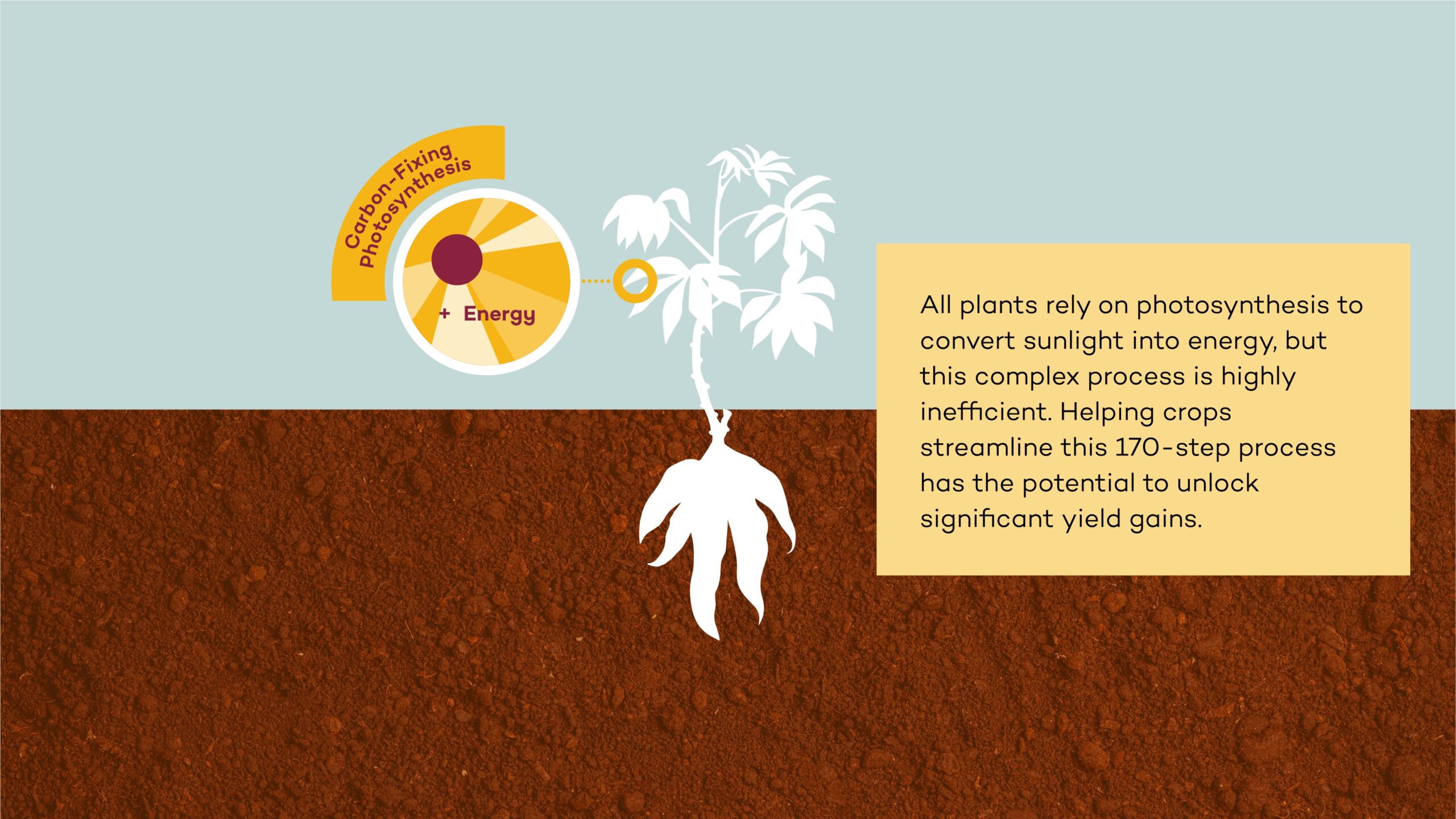
Carbon-Fixing Photosynthesis
All plants rely on photosynthesis to convert sunlight into energy, but this complex process is highly inefficient. Helping crops streamline this 170-step process has the potential to unlock significant yield gains.
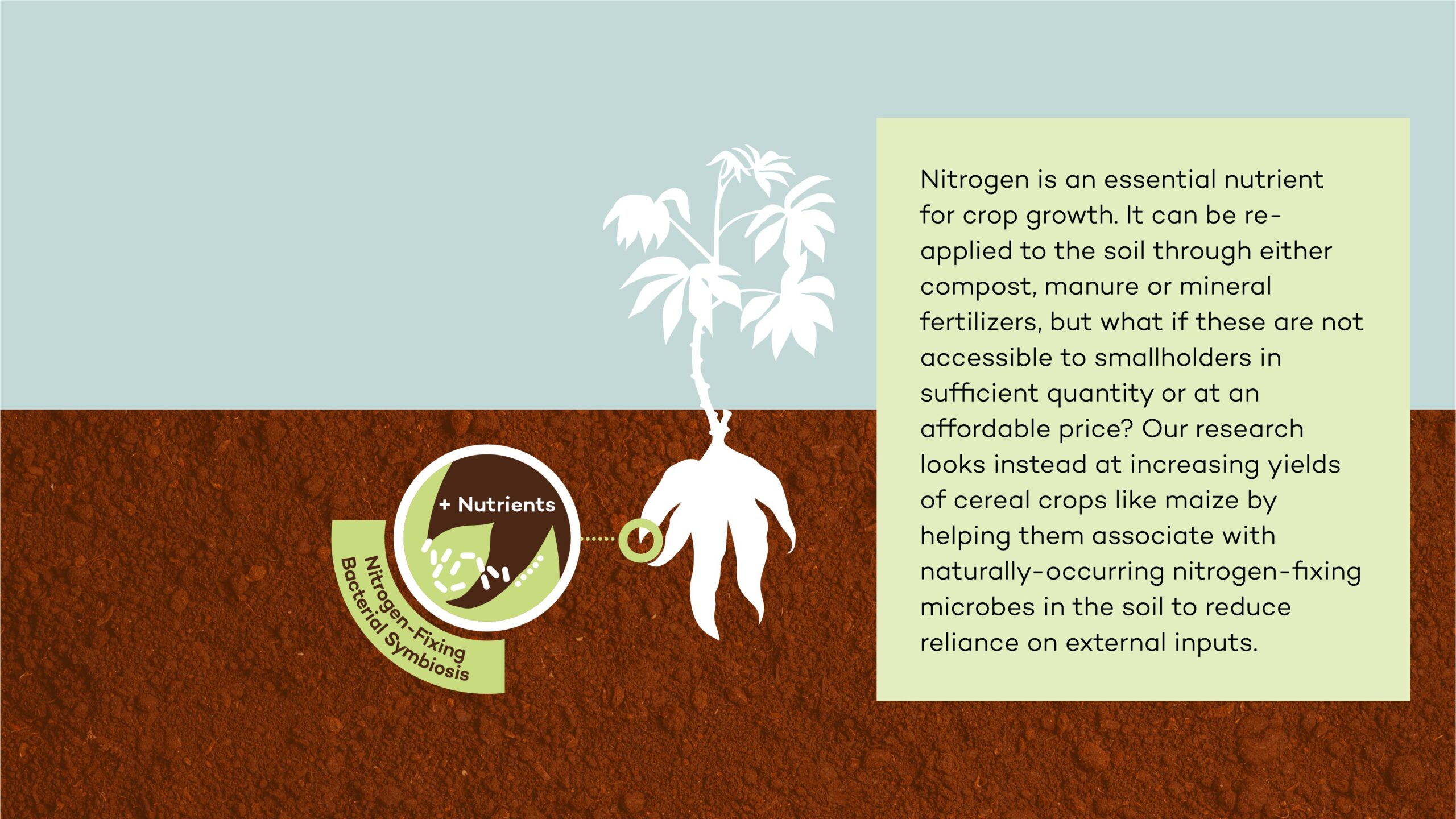
Nitrogen-Fixing Symbiosis
Nitrogen is an essential nutrient for crop growth. It can be re-applied to the soil through either compost, manure or mineral fertilizers, but what if these are not accessible to smallholders in sufficient quantity or at an affordable price? Our research looks instead at increasing yields of cereal crops like maize by helping them associate with naturally-occurring nitrogen-fixing microbes in the soil to reduce reliance on external inputs.
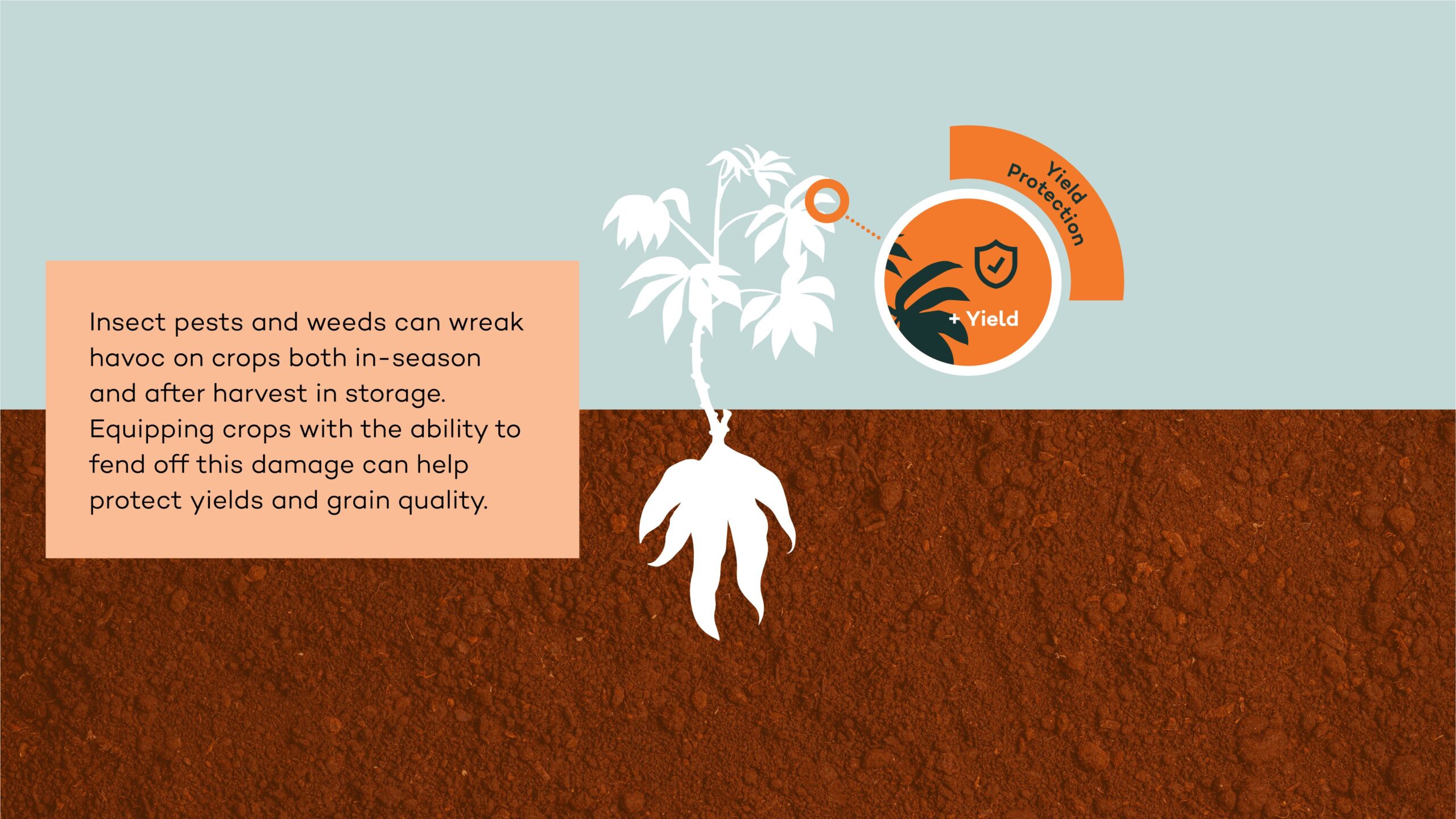
Yield Protection
Insect pests and weeds can wreak havoc on crops both in-season and after harvest in storage. Equipping crops with the ability to fend off this damage can help protect yields and grain quality.
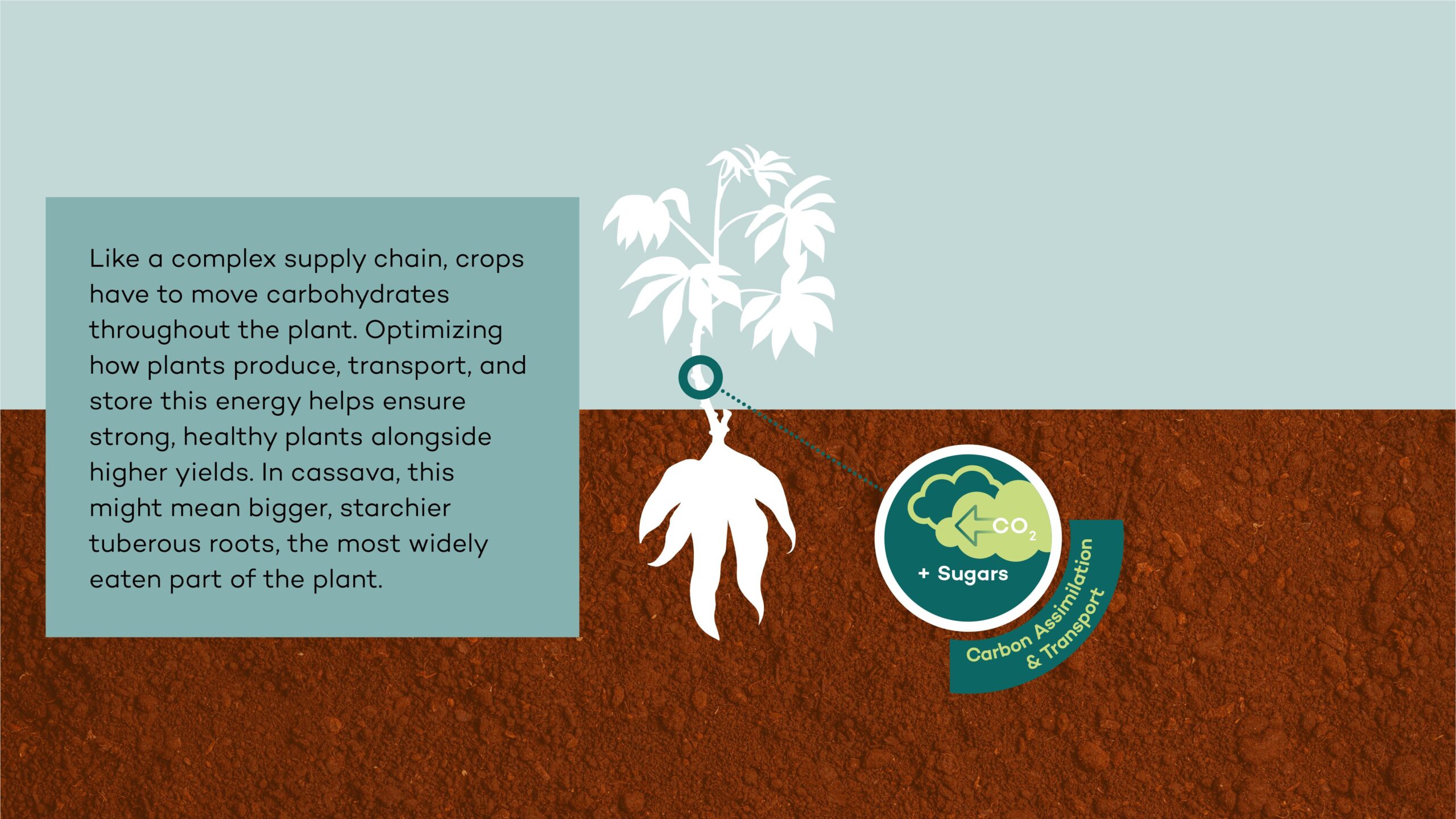
Carbon Assimilation & Transport
Like a complex supply chain, crops have to move carbohydrates throughout the plant. Optimizing how plants produce, transport, and store this energy helps ensure strong, healthy plants alongside higher yields. In cassava, this might mean bigger, starchier tuberous roots, the most widely eaten part of the plant.